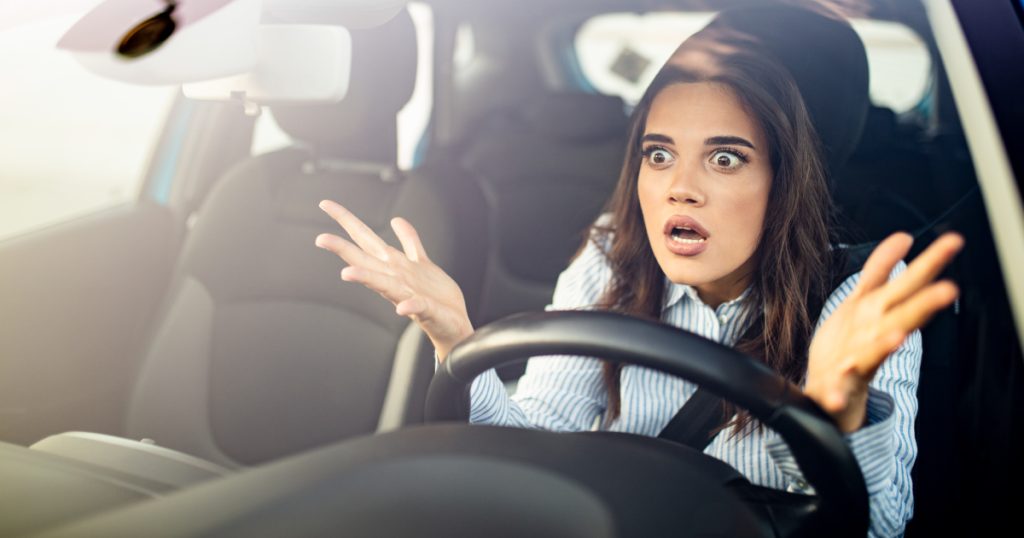
At one point or another, drivers will experience road rage either themselves or at the hands of someone else. In the past year, 78% of Canadian drivers said they had witnessed a rage incident, while 51% admitted to engaging in it themselves.
Dangerous behaviours on the road
Aggressive driving and road rage are both dangerous but defined differently. Aggressive driving refers to more reckless actions such as speeding, tailgating, flashing lights, blocking another car from passing, weaving in and out of traffic, ignoring the right of way, and running traffic signs or signals. Road rage is more reactionary from a driver in an attempt to intimidate, injure or even kill other drivers, pedestrians, and cyclists by yelling, gesturing, honking, or even getting into physical altercations as well as purposefully trying to damage someone else’s vehicle.
Getting caught doing any of these behaviours can result in penalties ranging from demerits to losing your license while also raising your insurance rates. Minor convictions such as tailgating or speeding could lead to a 25% rate increase if you have two or more. Dangerous driving can be classified as a criminal code conviction resulting in a 300% increase for just one conviction, as well as possible license loss and jail time.
The Factors and the Furious
There are a number of reasons a driver may choose to engage in aggressive driving behaviour:
- Heavy traffic volume
- Delays or detours from construction, roadwork, hazards, or other accidents
- Time pressures or feeling late
- Stress from personal or work lives
They can lead to feelings of impatience, anger, frustration, irritation, and increased stress that driving serves as a dangerous outlet for. Intention to do physical harm is the main difference between aggressive driving and road rage; Aggressive drivers intentionally disregard safety, but do not intend to harm anyone.
Don’t rage or engage
When anger does set in, don’t direct it towards other drivers. You don’t know how the other driver in front or behind you will react to your aggression or if there is a reason for their actions, i.e. going slowly due to a hazard ahead. Dangerous driving could endanger not only yourself, but your passengers, other drivers, and bystanders. It may seem unlikely that cutting someone off or waving hands could result in violence outside of the vehicle, but most deaths related to road rage are considered murders.
Tailgating and illegally passing are two of the most deadly forms of aggressive driving as they can cause multi-vehicle collisions, especially in poor conditions, at night, or at high speeds. Remind yourself that going slow may be inconvenient and annoying, but it’s better than causing an accident that could delay or harm you and others even more.
If you find yourself getting angry while driving, try some common diffusing techniques to calm down:
- Interrupt negative thoughts – Remind yourself it’s not personal and you don’t know the other driver’s situation. They could be going to a hospital or learning how to drive for the first time. Empathy goes a long way!
- Practice calm breathing – Take five deep belly breaths by inhaling for 10 seconds followed by exhaling for 10 seconds. It can help lower your heart rate and reduce the level of stress hormones in the body.
- Check in with your body – Are you white-knuckling the steering wheel? Is your jaw clenched? Are your ears up by your shoulders? Take a moment to release that tension while doing some deep breathing.
- Avoid the horn – It’s tempting to blast or lay on the horn at someone who is annoying you, but horns are meant to be quick communication signals for alerts, not excessive impatience.
Protect your vehicle and your peace
If you find yourself in a situation with an aggressive driver or someone who is experiencing road rage, try to get them out of your space as quickly and safely as possible. Let them pass if they’re trying to pass, don’t make eye contact to prevent engaging with them, contact authorities if safe to do so and their driving poses a serious threat to others, and don’t go home if you feel the person is trying to harm you and your vehicle.